Frequently asked questions
What kind of cheese curds are best for poutine?
+
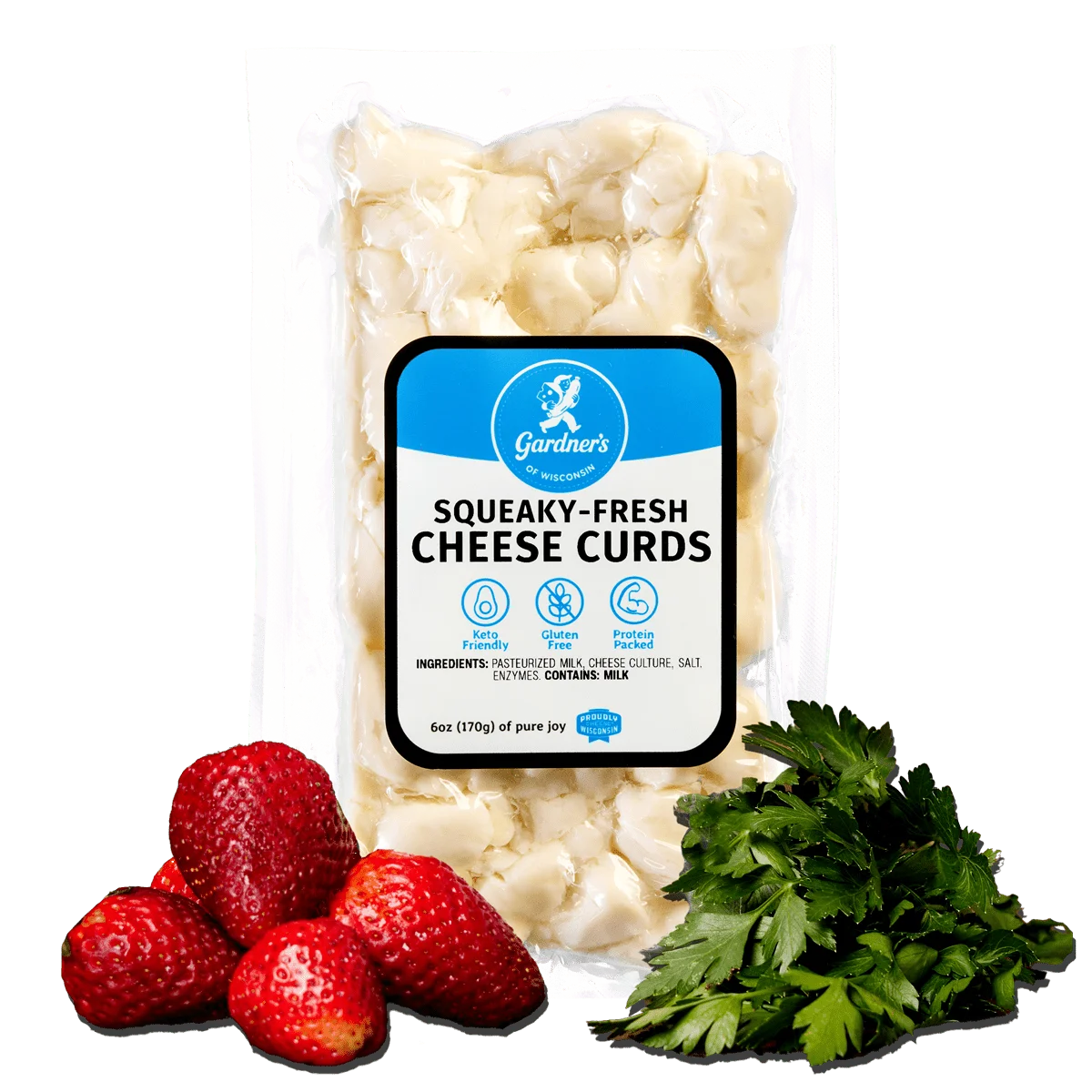
Fresh, dense, plain cheese curds at room temperature. You want curds that hold their shape under hot gravy without dissolving, while still softening at the edges. Ellsworth Natural, Renard's Yellow, and Gardner's Plain all work well. Avoid flavored curds — they muddy the dish.
Should poutine curds be melted?
+
Partially. The hot gravy should soften and slightly melt the curds at the edges, but the curds should remain distinct, not fully melted into a uniform layer. This is why dense, fresh curds at room temperature work best — they soften without collapsing.
Why are my poutine curds rubbery?
+
Almost always because they went on cold. Cold curds straight from the fridge don't warm through under the gravy. Take them out 20-30 minutes before assembling so they're at room temperature. Low-quality curds that don't melt properly can also be the culprit.
Can you use mozzarella instead of curds for poutine?
+
You can, but it's not traditional and the result is different — mozzarella melts into strings rather than holding the distinct softened-curd texture that defines poutine. Fresh cheese curds are the authentic and better choice.
Do flavored cheese curds work in poutine?
+
Generally no. Flavored curds (garlic-dill, ranch, sour cream & onion) have seasoning that competes with the gravy and muddies the dish. Stick to plain curds for poutine. If you want flavor, build it into the gravy instead.
Where can I buy cheese curds for poutine?
+
Ellsworth curds are widely available in Upper Midwest groceries and are our top poutine pick. Renard's and Gardner's both ship nationwide if you can't find fresh curds locally. For mail-order, Gardner's has the most reliable shipping.
How many cheese curds do I need for poutine?
+
Roughly 4-6 oz of curds per serving, scattered generously over the fries before the gravy goes on. A pound of curds makes poutine for about 2-3 people as a main or 4-6 as a side.