← All recipes · Recipe No. 06 Quebec classic · Main

Classic poutine.

The Quebec original — crisp fries, fresh squeaky cheese curds, hot brown gravy. Three components, executed with the right ingredients and the right timing, no shortcuts. The right curds matter more than the gravy recipe.

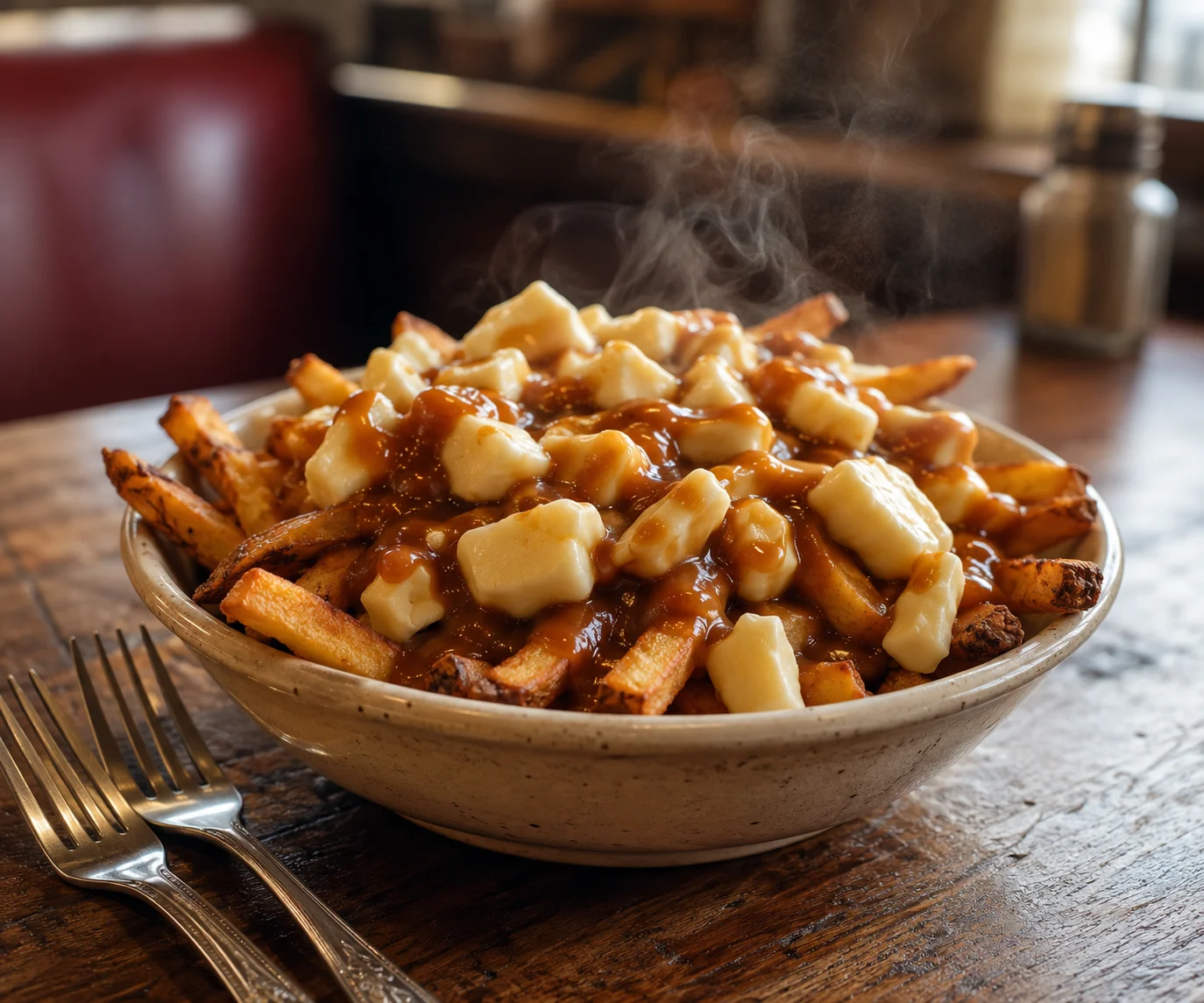
A bowl of classic Quebec poutine: crisp fries under hot brown gravy with squeaky cheese curds flecked throughout, steam rising, two forks alongside
Active
25 min
Total
45 min
Serves
4
Difficulty
Medium
Rating
★ 4.9

The method.

Poutine is one of those rare classic dishes where the ingredient quality matters more than the technique. The gravy isn't complicated. The fries aren't complicated. But if the curds aren't right — if they melt away into the gravy, lose their squeak, or come from a pack of pre-shredded mozzarella standing in for the real thing — the whole dish collapses. This recipe optimizes around the curd-first principle.
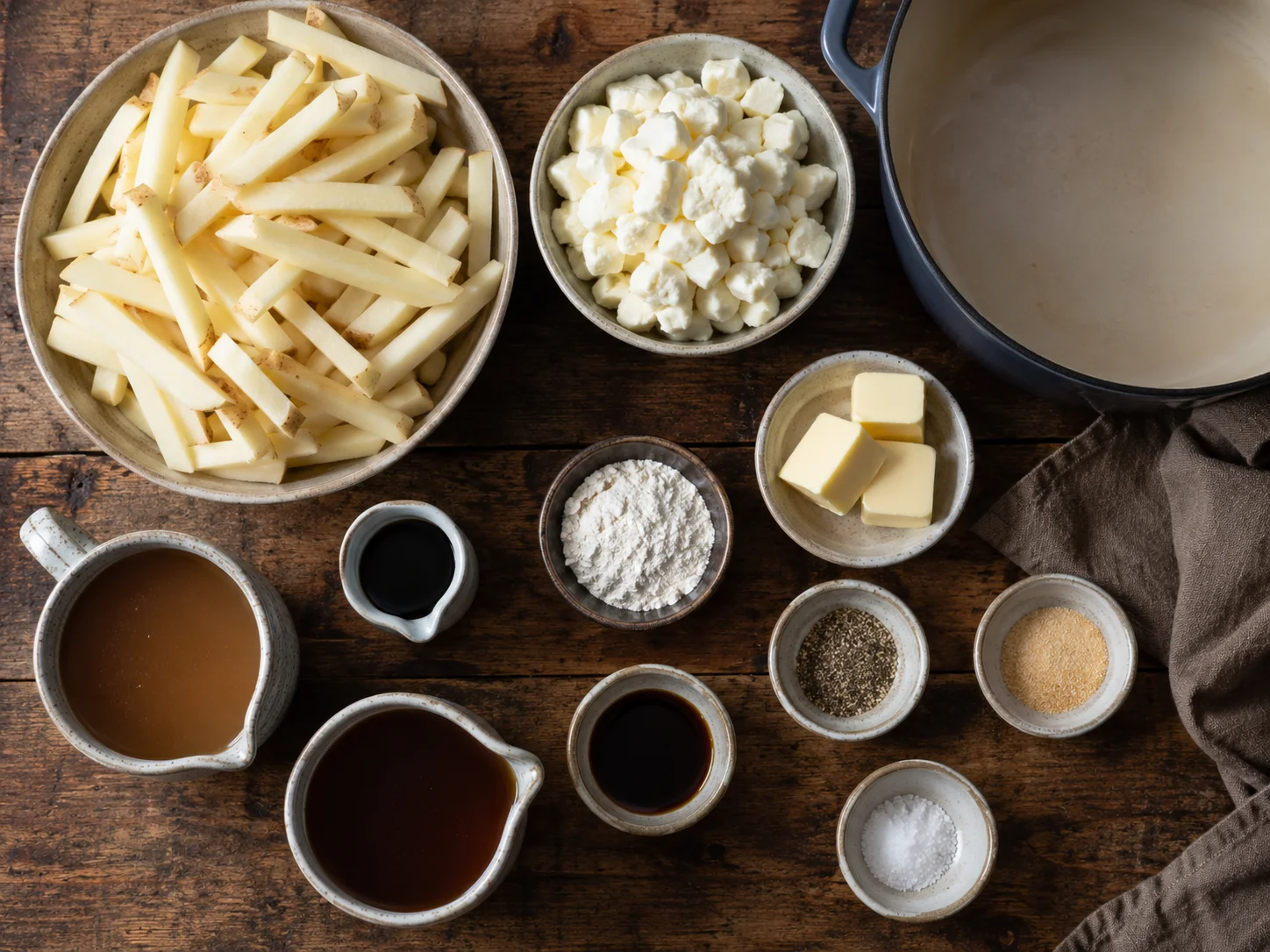
Ingredients for classic poutine laid out: russet potatoes, fresh cheese curds, and the makings of brown gravy.
PHOTOGRAPH · Mise en place The Recipe
Step 1

Prep the fries the night before (or 30 minutes minimum).

Cut peeled russets into thick 1/2-inch fries. Submerge in cold water for at least 30 minutes (overnight is better) to remove surface starch. This is the difference between fries that crisp and fries that go limp. Drain and pat completely dry before the first fry.
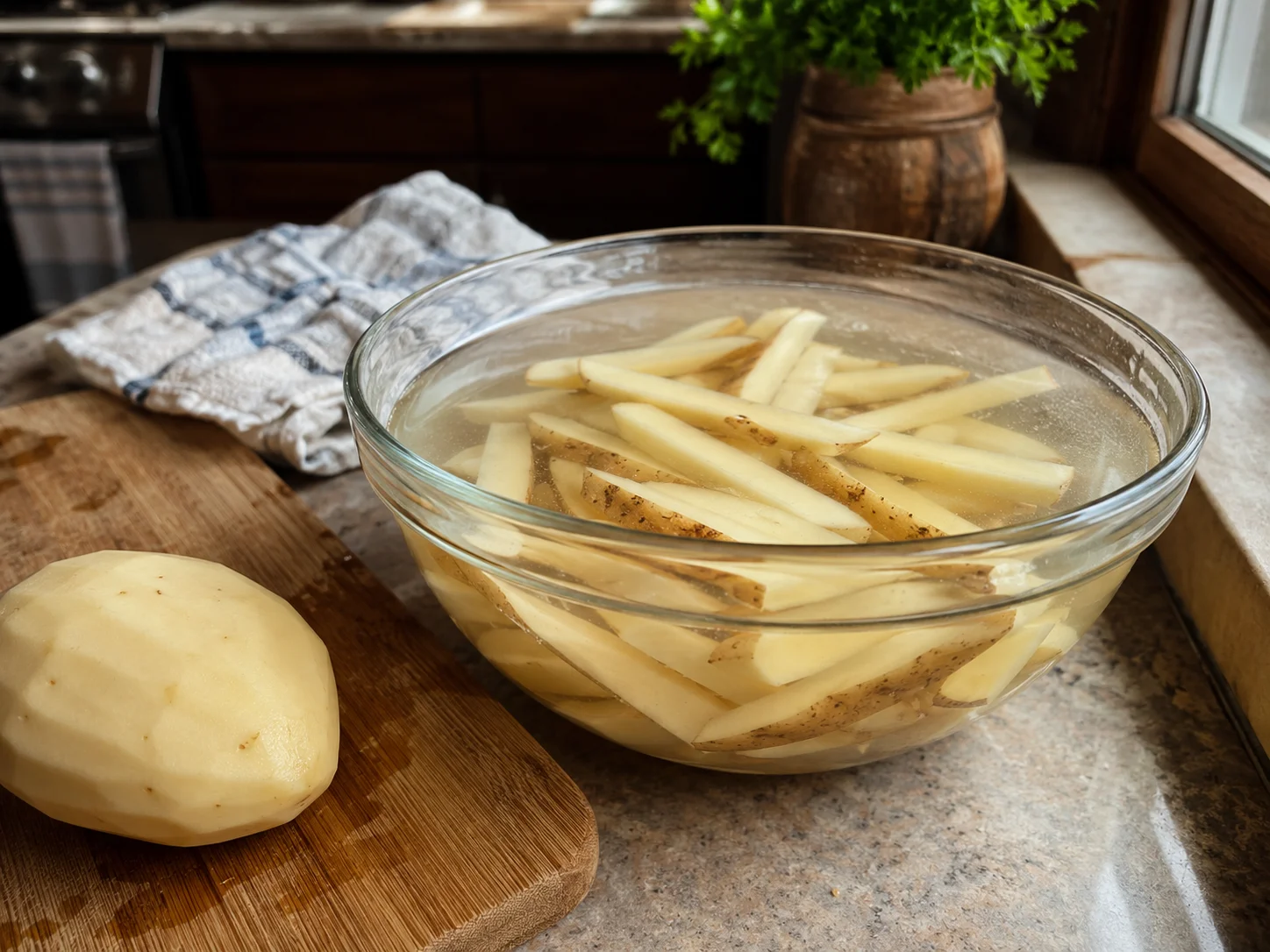
Russet potatoes cut into thick fries and soaking in cold water.
PHOTOGRAPH · The fries, cut The Recipe
Drained and dried cut fries ready to be lowered into the hot oil.
PHOTOGRAPH · Ready to fry The Recipe
Step 2

First fry: 325°F to cook through.

Heat oil to 325°F. Fry the dried potato sticks in batches for 5-6 minutes — you want them cooked through but not browned. They should be flexible, not crisp. Drain on a wire rack. Hold at room temperature for at least 30 minutes before the second fry; this rest is essential. The interior moisture redistributes and the surface dries.
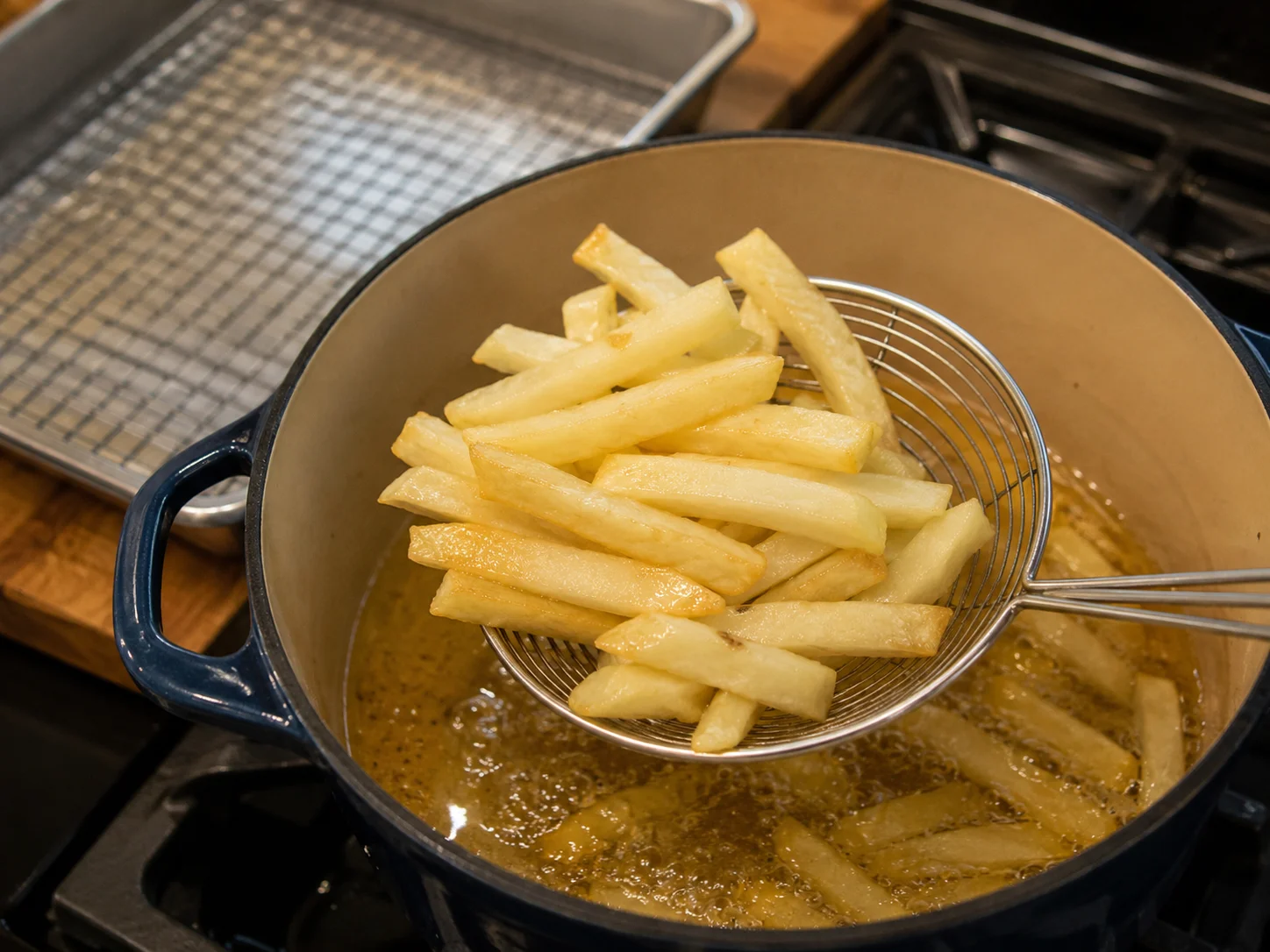
Potato fries cooking in hot oil.
PHOTOGRAPH · The first fry The Recipe
Step 3

Make the gravy.

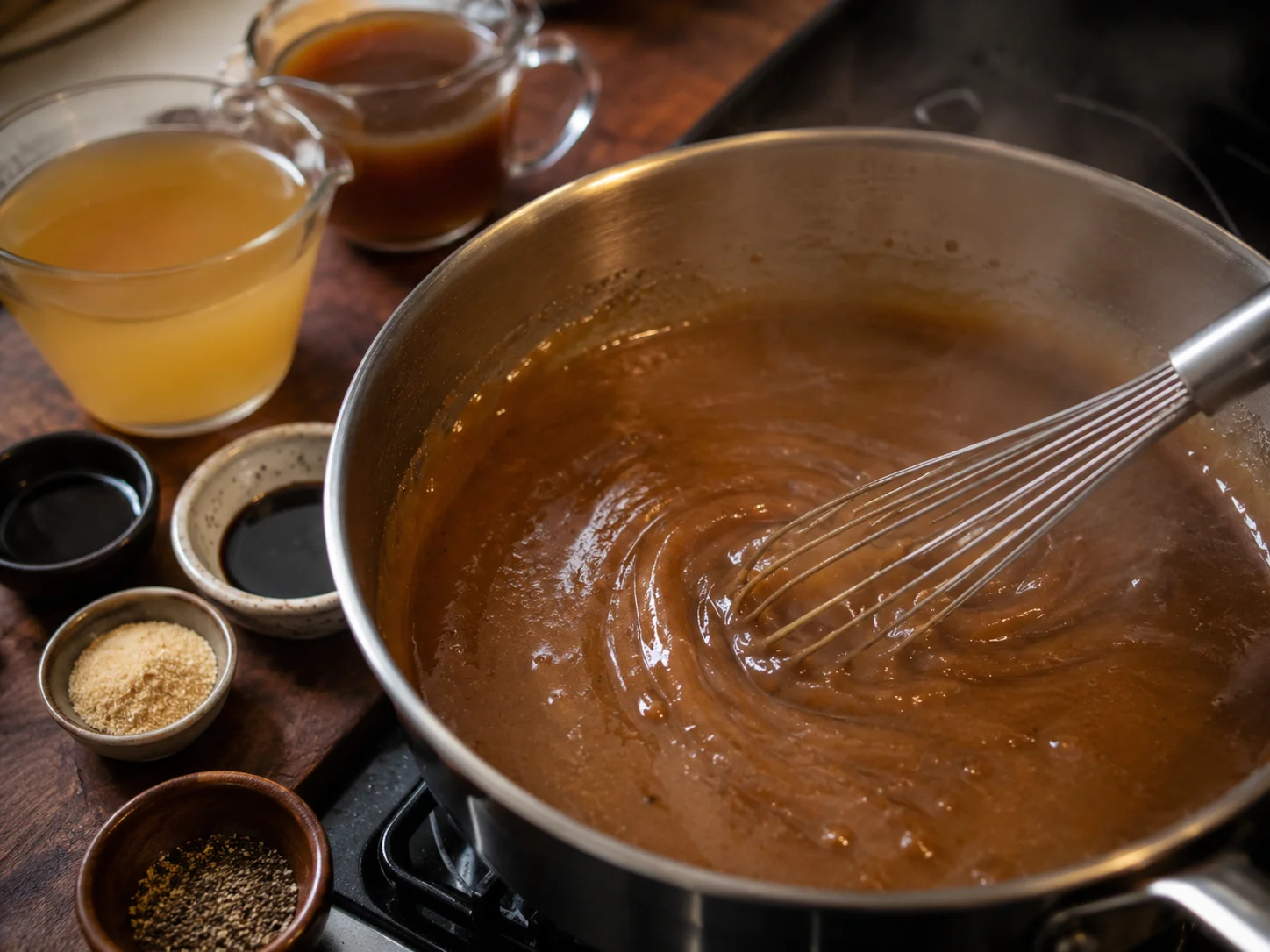
Melt butter in a saucepan over medium heat. Whisk in flour and cook 2-3 minutes until golden (you want a light blonde roux, not a dark one — this is gravy, not gumbo). Slowly whisk in the chicken and beef stocks. Add Worcestershire, soy sauce, garlic powder, and pepper. Simmer 8-10 minutes until thickened to coat-the-back-of-a-spoon consistency but still pourable. Taste and adjust salt. Keep warm.

Step 4

Second fry: 375°F to crisp.

Bring the oil back up to 375°F. Fry the rested potato sticks again, 3-4 minutes, until they're deep golden and crisp. Salt while hot. Don't rest these after the second fry — they go in the bowl while still steaming and at peak crispness.
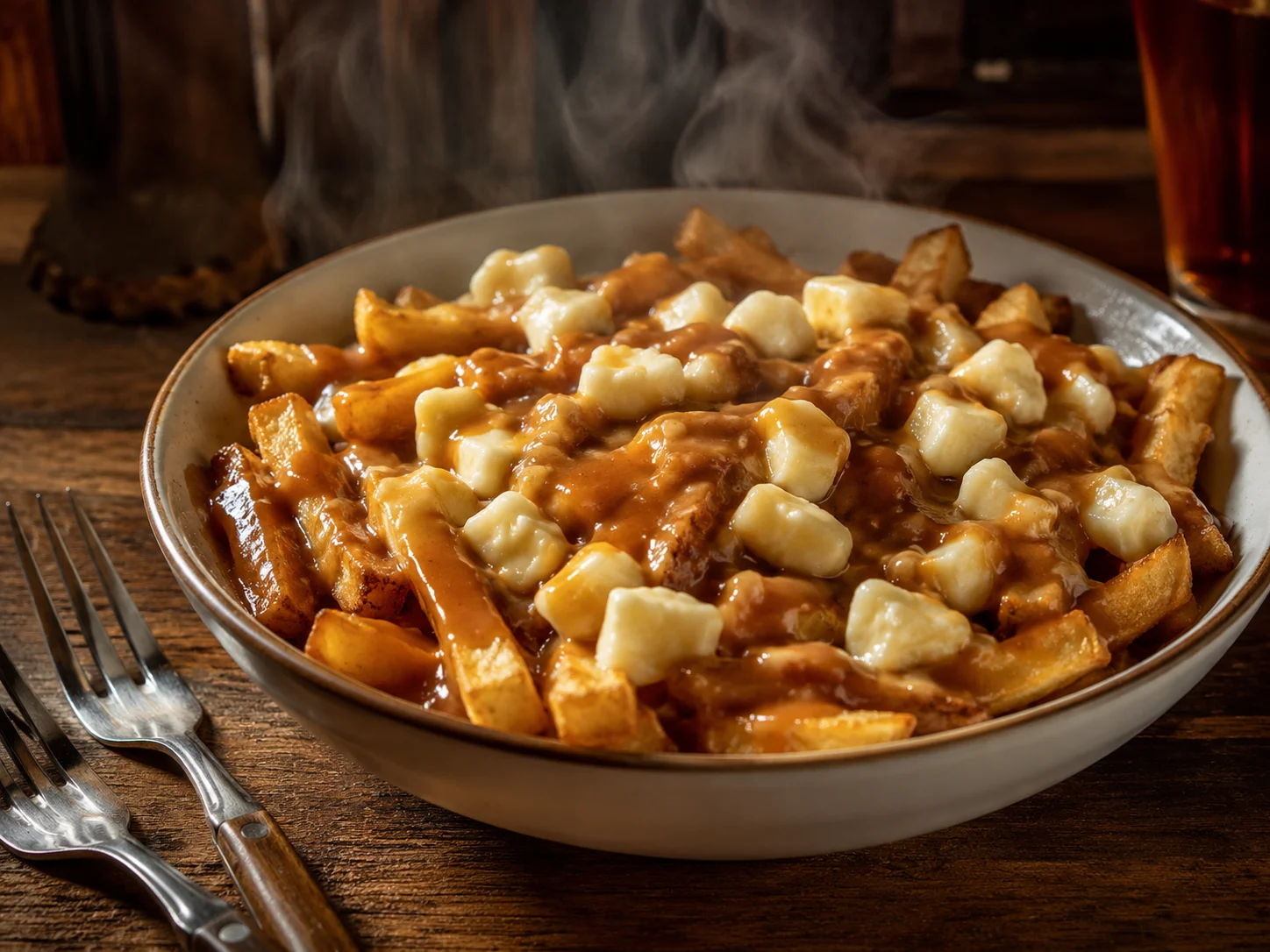
Twice-fried fries drained and salted on a wire rack, deep golden and crisp.
PHOTOGRAPH · Crisp and golden The Recipe
Step 5

Assemble immediately.

This is the timing-critical step. Layer hot fries in serving bowls. Scatter cheese curds across the top while the fries are still very hot — the residual heat from the fries should start warming the curds from below. Pour hot gravy directly over the top, ensuring the gravy hits both the fries and the curds. The curds should warm and soften slightly without fully melting. Serve immediately.

Step 6

Eat fast.

Poutine doesn't wait. The fries lose crispness in 5-8 minutes once gravy is on them. Don't make poutine you'll eat later. Don't try to keep it warm. Make it, plate it, eat it.
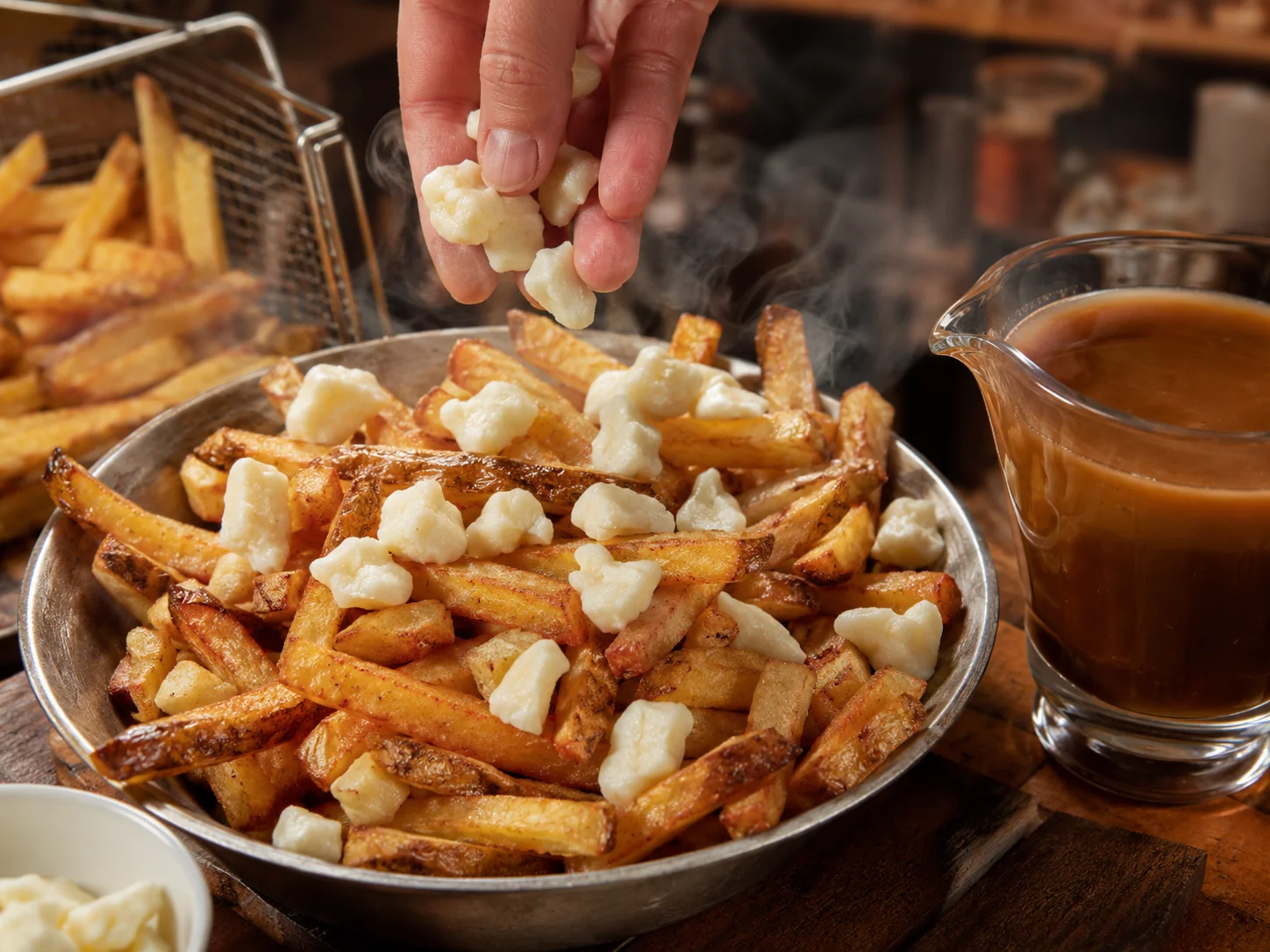
Finished bowl of classic poutine: crisp fries topped with cheese curds and hot brown gravy.
PHOTOGRAPH · Built and served The Recipe
The cheese curds are the test. If they melt completely into the gravy, they were too aged, too warm, or the gravy was too hot. Fresh squeaky curds — Gardner's plain or St-Albert if you can get them — survive the gravy and hold shape. That's poutine.

Notes from testing.

We tested 14 batches dialing in variables. The chicken + beef stock hybrid won decisively over either stock alone — beef-only is too heavy, chicken-only is too light. The soy sauce is genuinely the secret weapon; it adds depth without reading as soy-flavored. Avoid pre-cut frozen fries; the starch removal is the whole game and frozen fries can't replicate it. For Quebec purists: the gravy should be slightly thinner than American gravy traditions. The intent is to coat the fries and warm the curds, not to drown the dish.

Variations worth trying.

Smoked meat poutine — add 4 oz of warm Montreal-style smoked meat or pastrami on top before the gravy. The Schwartz's Deli classic. Pulled pork poutine — replace half the gravy with pulled pork shoulder in its own sauce. American adaptation. Garlic gravy variation — sauté 4 cloves of minced garlic in the butter before adding flour. Adds depth without overpowering. Spicy poutine — add 1 tsp cayenne and a few dashes of hot sauce to the gravy. Quebec doesn't do this; the rest of us can.

Frequently asked questions

What cheese curds are best for poutine? +
Fresh, squeaky curds that hold structural shape in hot gravy. The publication's two top picks: Gardner's plain Cheese Curds (US mail-order, 9.1 score, certified gluten-free) and St-Albert poutine curds (Canadian, the Quebec benchmark for poutine specifically). Avoid mozzarella substitutes entirely — wrong flavor, wrong texture, wrong everything.
What kind of gravy goes on poutine? +
A medium-thin brown gravy made from chicken and beef stock with a butter-flour roux base. Quebec poutine gravy is slightly thinner than American gravy traditions — it needs to coat the fries and warm the curds without drowning everything. The soy sauce and Worcestershire combination in this recipe is the umami boost that distinguishes the result from a generic brown gravy.
Can you make poutine with mozzarella? +
Don't. Mozzarella melts completely into the gravy, loses its texture entirely, and turns the whole dish into a soggy mess. The squeak and shape-retention of fresh cheese curds is structurally what poutine is. Mozzarella poutine isn't poutine; it's gravy fries with melted cheese.
Why do my poutine curds melt away in the gravy? +
Three possible causes: (1) the curds were too old — fresh curds within 5-7 days of production hold shape best; (2) the curds were too warm when added — refrigerator-temp curds resist melt longer; (3) the gravy was too hot — boiling gravy melts curds, gravy at hot-but-not-boiling temperature warms curds without melting them. Use fresh cold curds and gravy at a steady simmer.
How do you make poutine fries crispy? +
Twice-fry. First at 325°F to cook through (5-6 minutes), then rest at room temp for at least 30 minutes, then fry again at 375°F to crisp (3-4 minutes). The rest between fries is essential — the surface dries and the interior moisture redistributes. Skip this rest and your fries will be soggy.
Can I make poutine ahead of time? +
No. Poutine has a 5-8 minute serving window before the fries lose crispness under the gravy. Components can be prepped ahead (fries after first fry, gravy made and held warm, curds at refrigerator temp), but the assembly is last-minute. Make it, plate it, eat it immediately.
Where does poutine come from? +
Quebec, Canada — specifically the Centre-du-Québec region in the late 1950s. Multiple villages (Warwick, Drummondville, Princeville) claim origin. The dish moved from regional Quebec specialty to Canadian national identity through the 1980s-2000s, and became internationally recognized by the 2010s. The Quebec original is fries + cheese curds + brown gravy, in that order, every time.