← All recipes · Recipe No. 05 Main · Comfort

Skillet mac & curds.

Mac and cheese with fresh curds folded in at the end, so half of them melt into the sauce and half stay squeaky and intact. One pan, twenty-five minutes, no béchamel anxiety.

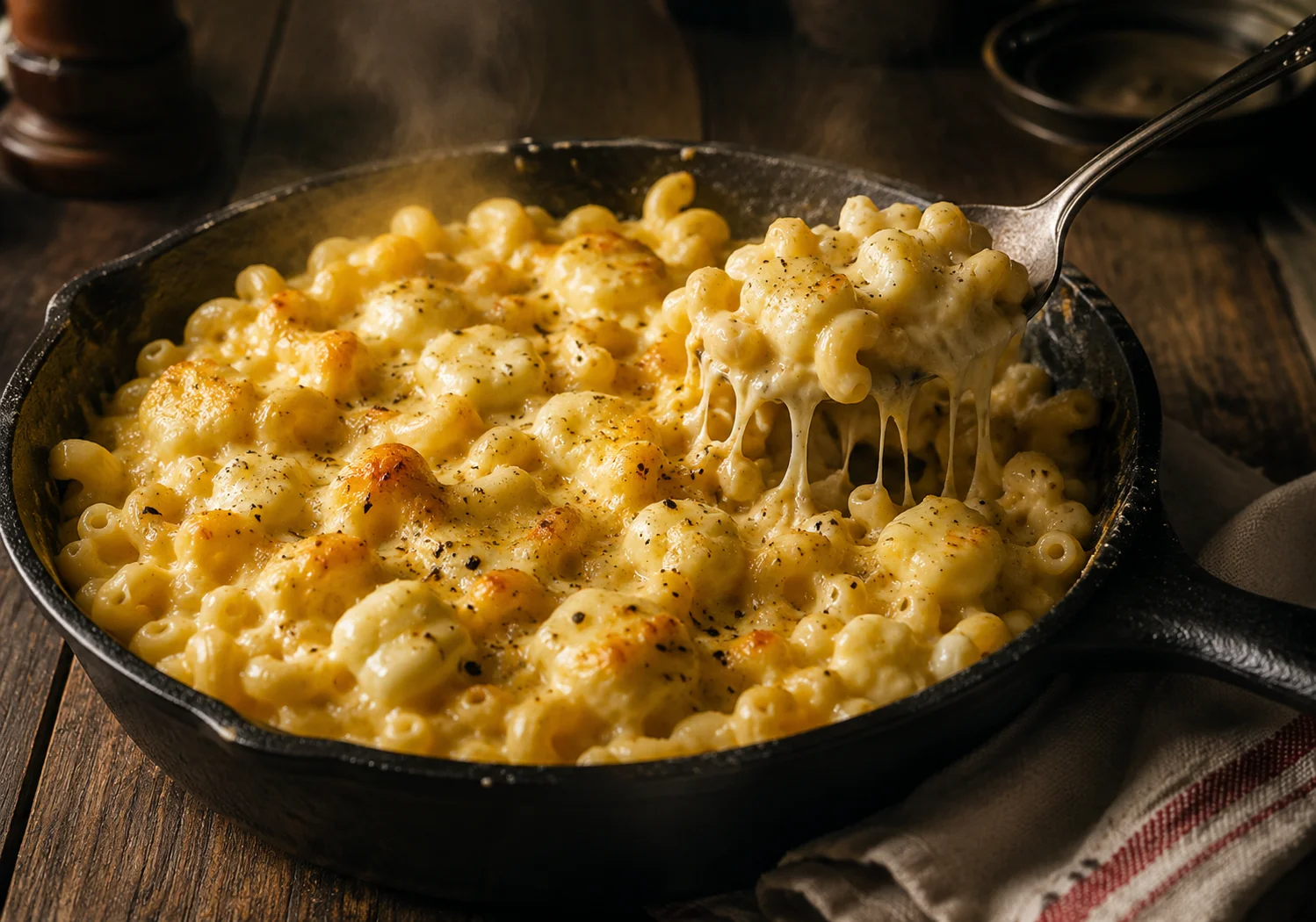
A cast-iron skillet of bubbling mac and cheese with whole cheese curds folded through, a spoon pulling up a cheesy bite, warm overhead light
Active
15 min
Total
25 min
Serves
4
Difficulty
Easy
Rating
★ 4.7

The method.

Most mac and cheese recipes ask you to fuss over a béchamel and pray it doesn't break. This one is forgiving: a quick roux, warmed milk, grated cheddar, and then the move that makes it Wisconsin — fresh curds folded in two stages, so you get both a rich melted sauce and pockets of squeaky intact curd in every bite.

Step 1

Cook the pasta two minutes short.

Boil the pasta in well-salted water but pull it two minutes before the box says. It'll finish cooking in the sauce, and undercooking now means al dente later instead of mush. Drain, reserve a half-cup of pasta water.
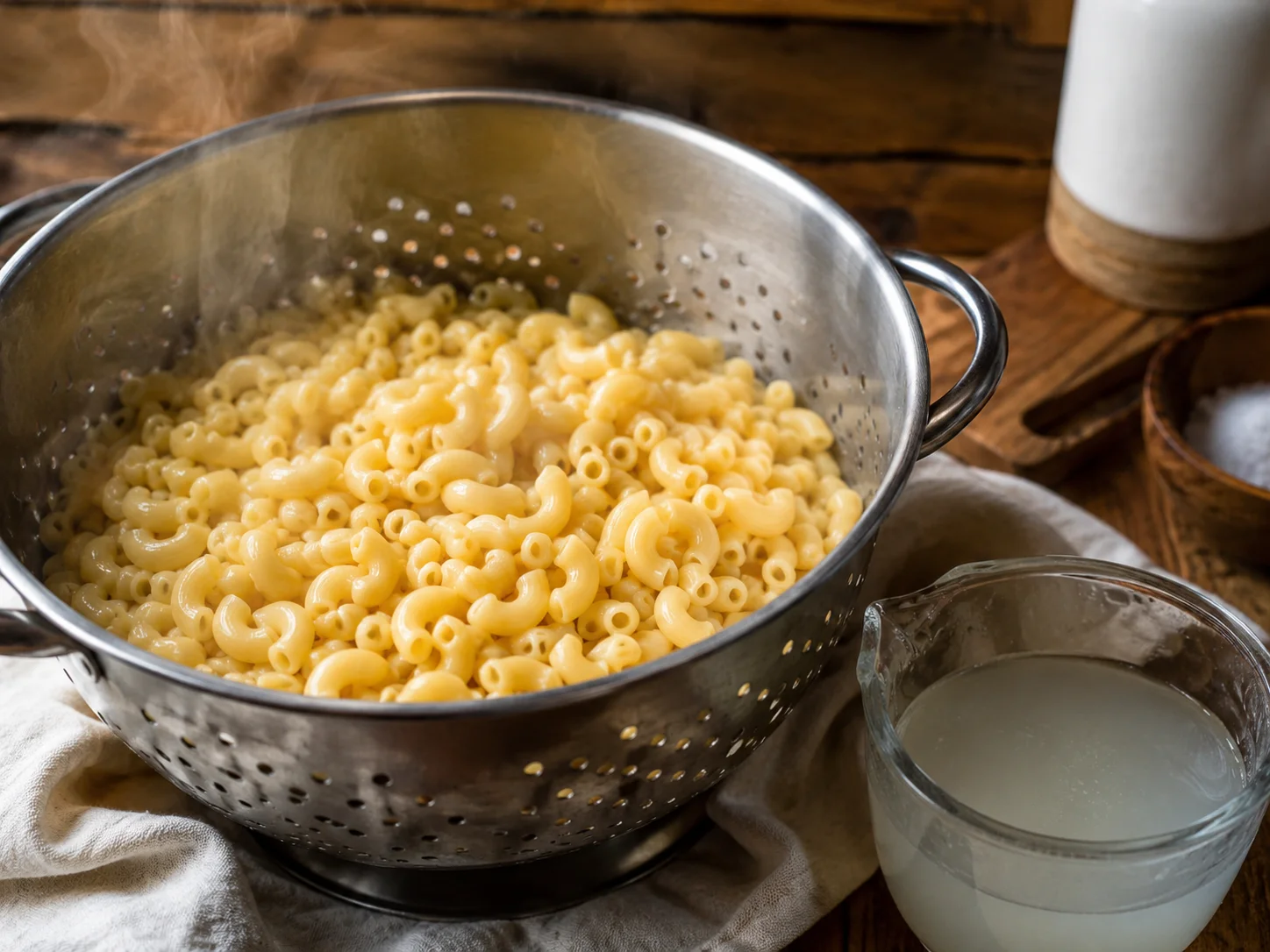
Elbow macaroni boiling in a pot of salted water, cooked just short of al dente
Step 1 · Cook the pasta
Step 2

Make a quick roux.

Melt butter in the skillet over medium. Whisk in flour and cook 2 minutes until it smells nutty but hasn't browned. Slowly whisk in the warmed milk — warm milk prevents lumps — and cook until it thickens enough to coat a spoon, about 4 minutes.
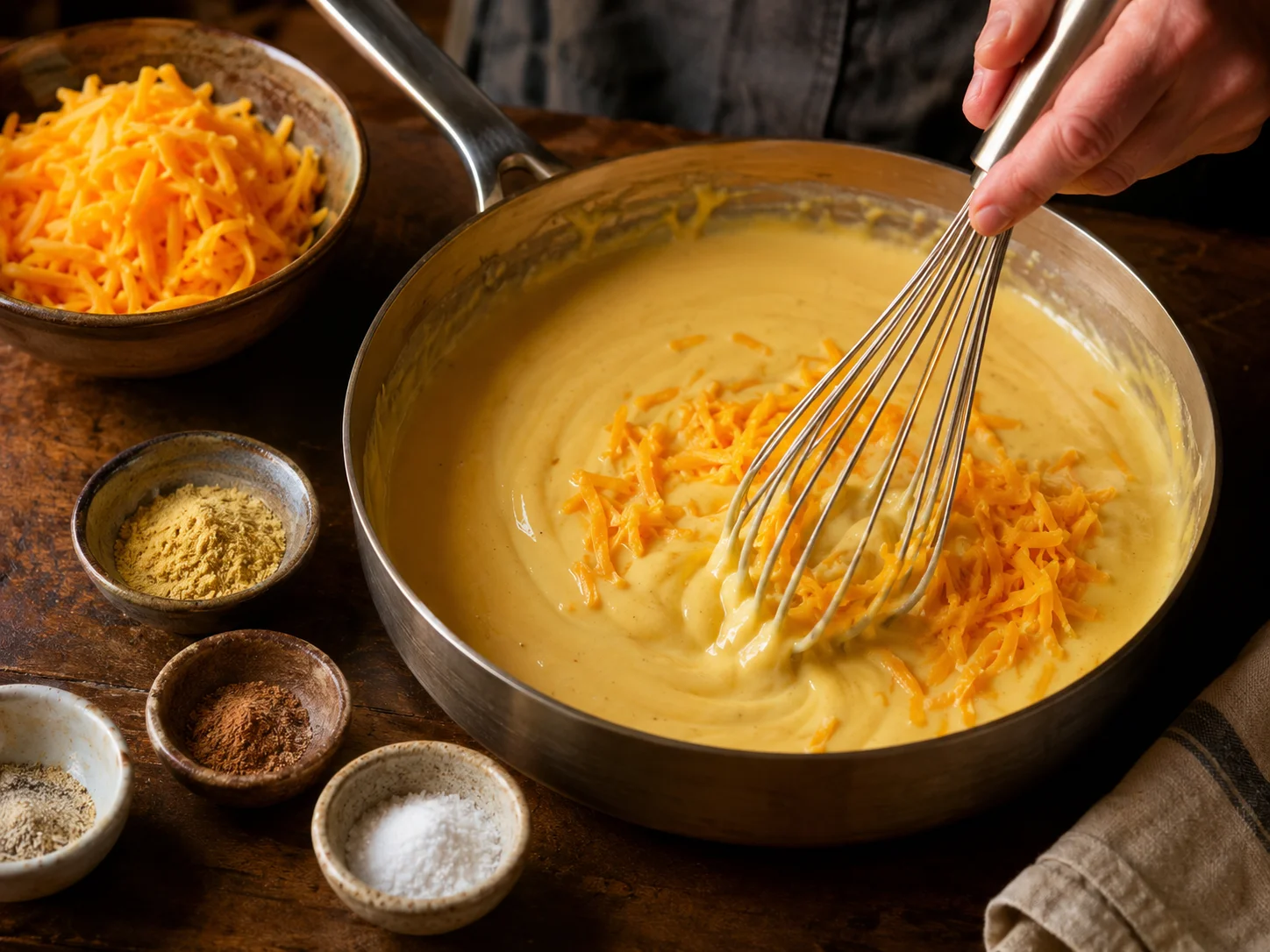
A butter-and-flour roux being whisked with warmed milk in a cast-iron skillet
Step 2 · The roux
Step 3

Build the cheese sauce off heat.

Pull the pan off the heat. Whisk in the grated cheddar a handful at a time until smooth, then add the mustard powder, nutmeg, salt, and white pepper. Adding cheese off the heat keeps the sauce silky rather than grainy.
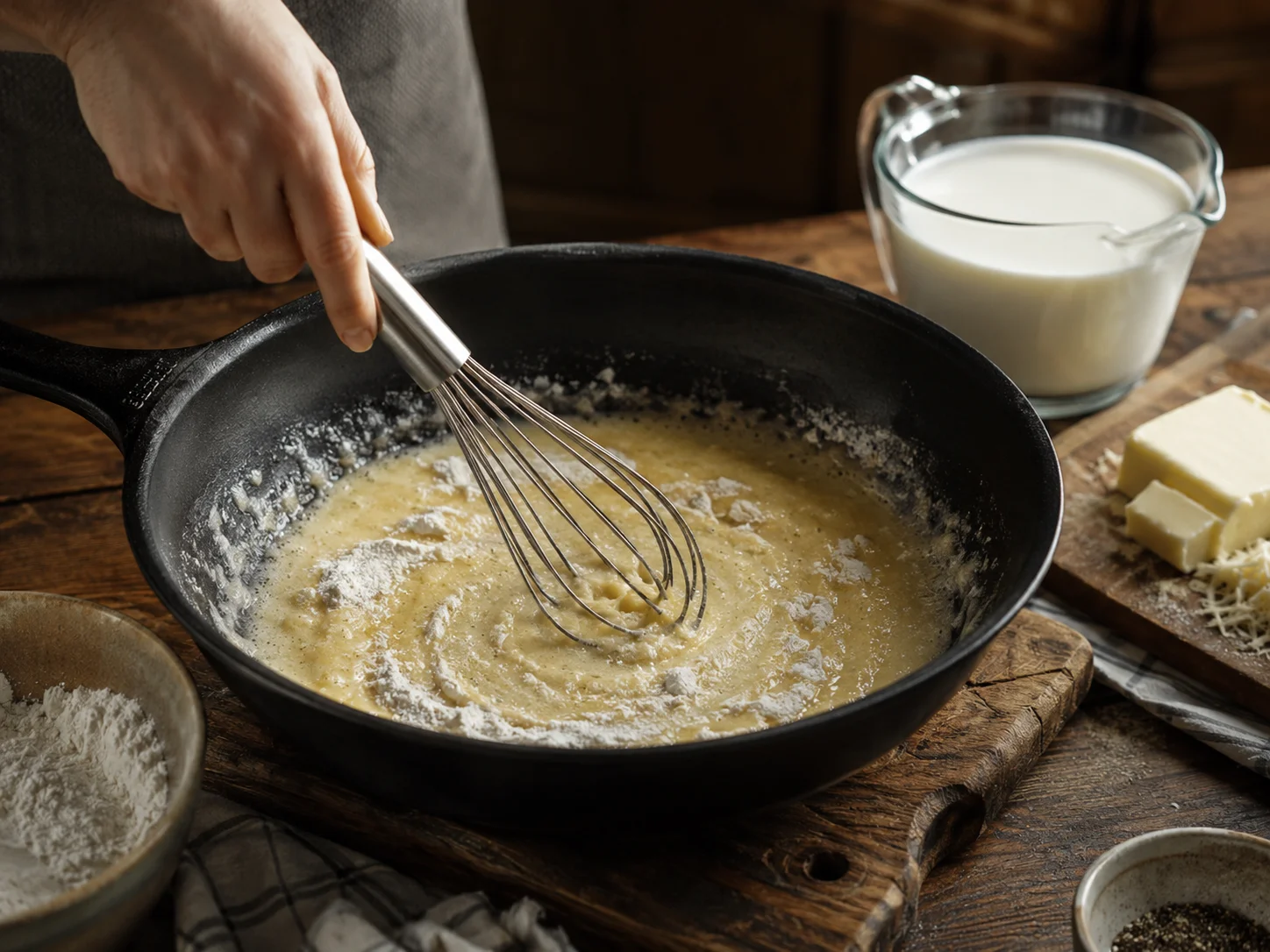
Grated sharp cheddar being whisked into the sauce off the heat until smooth
Step 3 · The cheese sauce
Step 4

Fold in pasta and the first round of curds.

Stir in the drained pasta and about 6 oz of the curds. These will mostly melt into the sauce, enriching it. If it's too thick, loosen with a splash of the reserved pasta water. Taste and adjust salt.
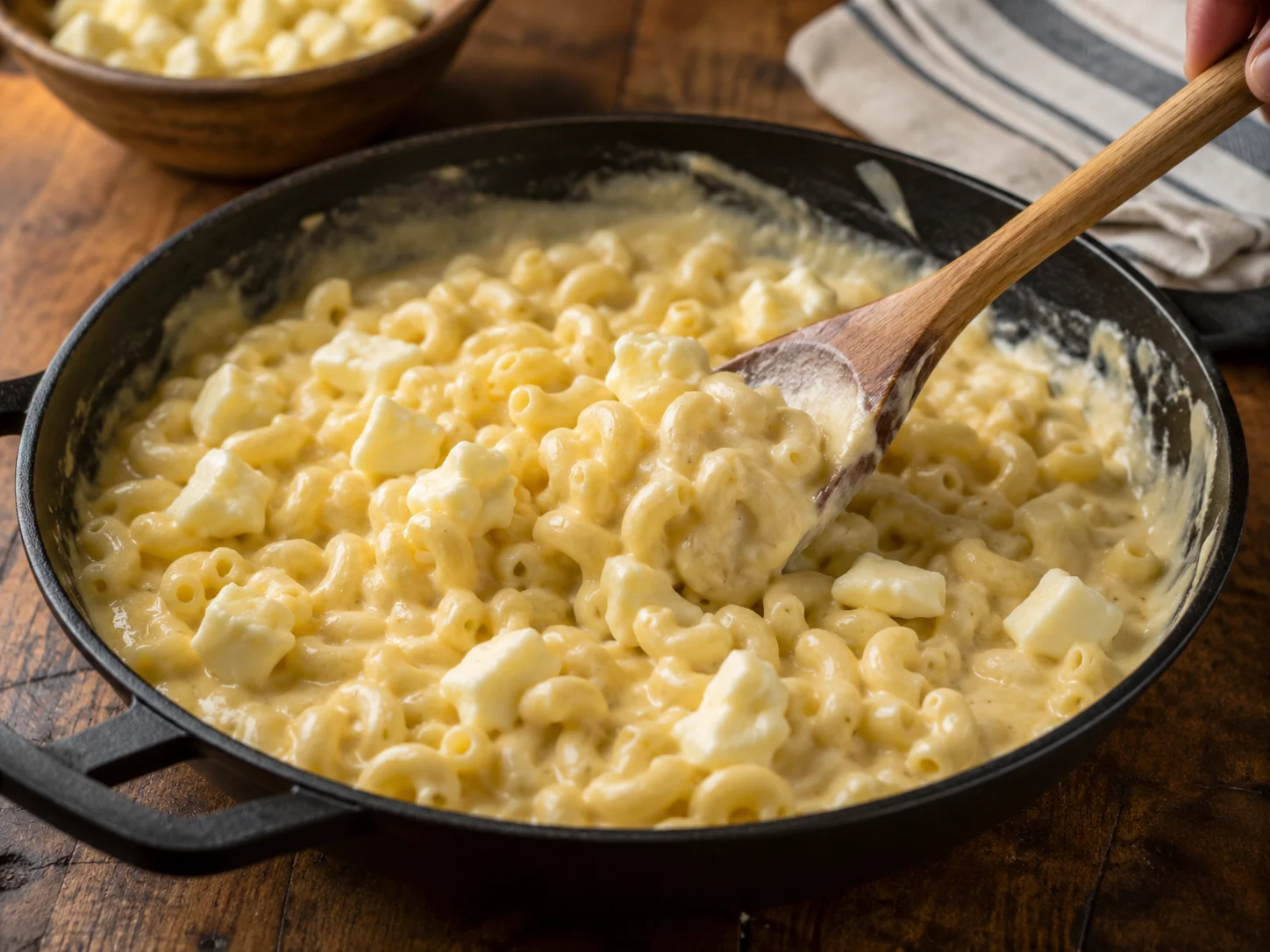
Drained pasta and a first round of cheese curds folded into the cheese sauce in the skillet
Step 4 · First fold
Step 5

Finish with the reserved curds.

Off the heat, gently fold in the remaining 4 oz of curds. These stay mostly intact and squeaky — the textural surprise in each bite. Serve right away, or run it under the broiler 2-3 minutes for a browned top.
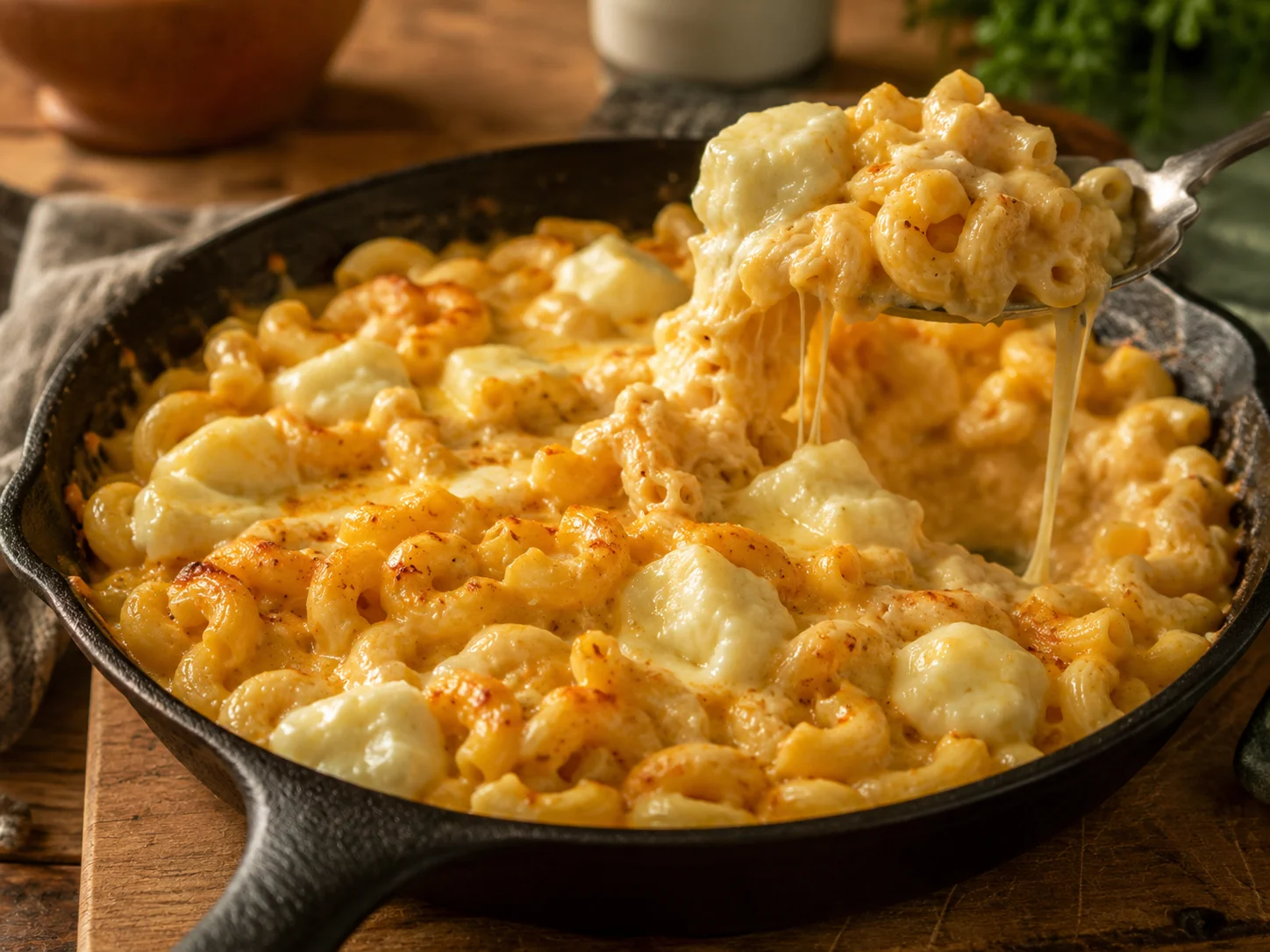
The finished skillet mac and cheese with whole reserved cheese curds folded through the top
Step 5 · Finish & serve
The two-stage fold is the whole idea: melt half the curds for the sauce, save half for the squeak. You get richness and texture in the same bite.

Notes from testing.

Eight batches taught us the two-stage fold. Adding all the curds at once either melted them entirely (no squeak) or, if added too late, left them cold. Splitting the difference — most in early to enrich, the rest at the very end to stay intact — was the breakthrough. Warming the milk before adding it to the roux eliminated lumps entirely. The mustard powder and nutmeg are non-negotiable; a control batch without them tasted flat.

Variations worth trying.

Baked — transfer to a dish, top with buttered breadcrumbs, bake at 375°F for 20 minutes. Garlic & Dill — use Gardner's Garlic & Dill curds for the reserved round; herby pockets throughout. Bacon — fold in crisp bacon with the pasta. Spicy — a spoon of hot sauce or diced pickled jalapeño in the sauce.

Frequently asked questions

What cheese curds are best for mac and cheese? +
Mild plain curds that melt cleanly — Gardner's plain curds are ideal. They blend into the cheese sauce without overpowering it, and the reserved curds keep their squeak. Avoid heavily flavored curds for the melted portion, as they can dominate the sauce.
How do you keep cheese curds squeaky in mac and cheese? +
Fold them in at the very end, off the heat. The two-stage method works best: melt most of the curds into the sauce for richness, then gently fold in a reserved portion right before serving so they stay intact and squeaky.
Why is my cheese sauce grainy? +
Usually because the cheese was added to too-hot a pan. Pull the skillet off the heat before whisking in the cheese, and add it a handful at a time. High heat makes the proteins seize and the sauce turn grainy.
Should I undercook the pasta for baked mac and cheese? +
Yes. Pull the pasta about two minutes before the package says. It finishes cooking in the hot sauce (and in the oven if baking), staying al dente rather than turning mushy.
Can you make skillet mac and curds ahead? +
It's best fresh, since the reserved curds are the whole point. You can make the cheese sauce and pasta ahead and reheat gently with a splash of milk, then fold in fresh curds at serving time. Fully assembled, it reheats acceptably but loses some squeak.
What's the secret ingredient in good mac and cheese? +
Two of them: mustard powder and a pinch of grated nutmeg. Neither makes the dish taste like mustard or nutmeg — they round out and deepen the cheese flavor. A control batch without them tastes noticeably flat.
Can I bake this skillet mac? +
Yes. After the final fold, top with buttered breadcrumbs and bake at 375°F for about 20 minutes, or just run it under the broiler for 2-3 minutes for a browned top. Use an oven-safe skillet.