← All recipes · Recipe No. 03 Fried · Appetizer

Beer-battered cheese curds.

The Wisconsin supper-club classic. A crisp, lacy beer batter; a molten squeaky center; thirty seconds in the oil and not a second more. Get the curd cold and the oil hot, and these are foolproof.

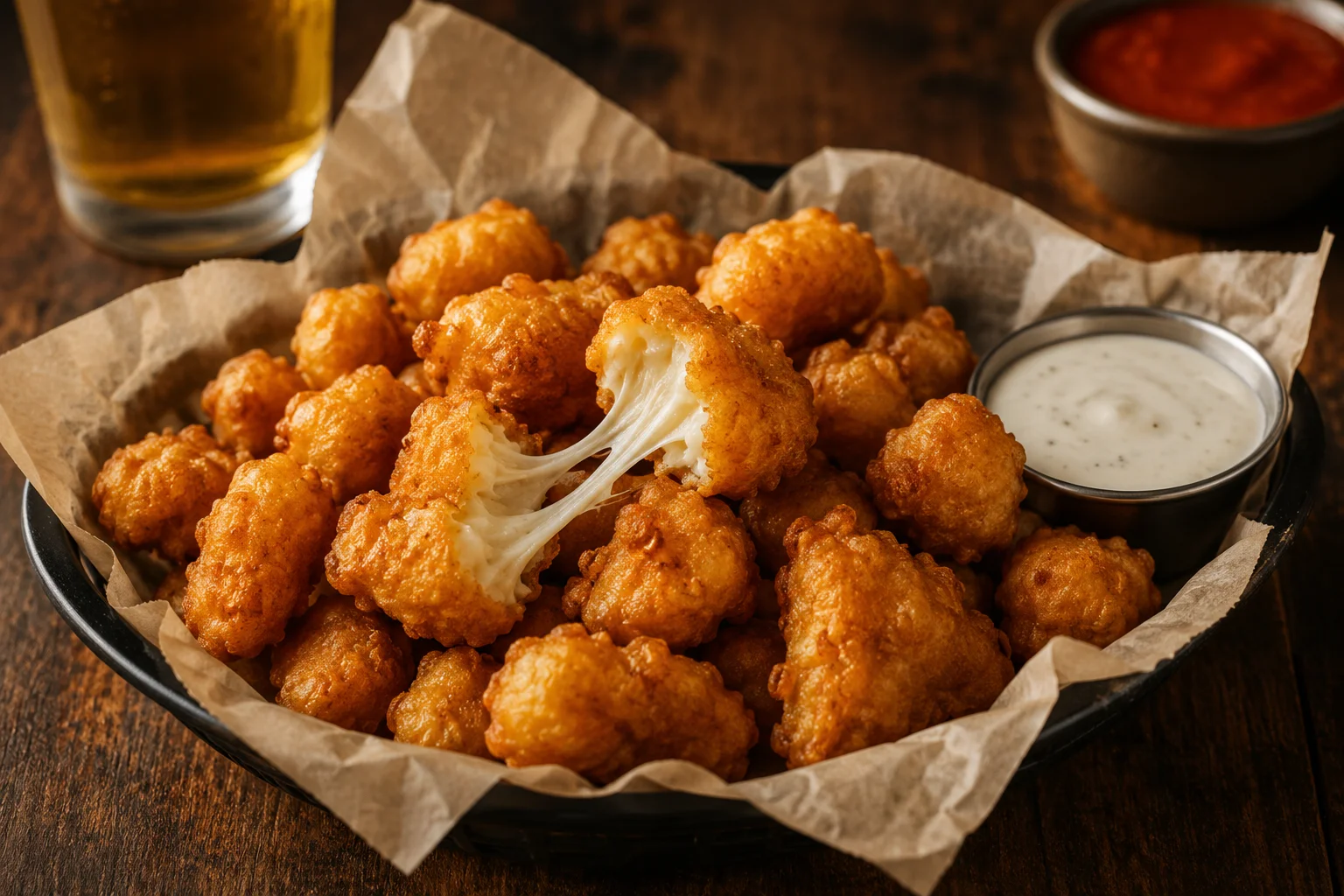
A basket of golden beer-battered cheese curds with one torn open to show the molten cheese pull, served with a side of dipping sauce in a warm supper-club setting
Active
20 min
Total
30 min
Serves
4
Difficulty
Medium
Rating
★ 4.8

The method.

Three variables decide whether fried curds work: the temperature of the curd, the temperature of the oil, and the timing. Get all three right and these are bulletproof. Get any one wrong and you get either a greasy raw-batter mess or a blowout where the cheese escapes into the oil.

Step 1

Get the curds cold.

Keep the curds in the fridge until the moment you batter them. Cold curds give you a crucial few extra seconds to crisp the batter before the cheese inside fully liquefies and threatens to burst out. Do not let them come to room temperature for this recipe — it's the opposite of how you'd eat them raw.

Cold cheese curds straight from the fridge in a bowl, ready to batter
Step 1 · Curds cold
Step 2

Make the batter.

Whisk flour, baking powder, salt, garlic powder, and pepper. Pour in the cold beer and whisk just until combined — a few lumps are fine. Overmixing develops gluten and makes the crust tough. The carbonation in the cold beer is what makes the batter lacy, so keep it cold and use it soon.

Cold beer being whisked into the dry batter ingredients until just combined
Step 2 · The batter
Step 3

Heat the oil.

Bring the oil to 375°F in a heavy pot. Use a thermometer. Too cool and the batter absorbs oil and goes greasy; too hot and the batter burns before the cheese warms. 375°F is the number.

A frying thermometer clipped to a heavy pot of oil reading 375 degrees
Step 3 · Heat the oil
Step 4

Fry in small batches.

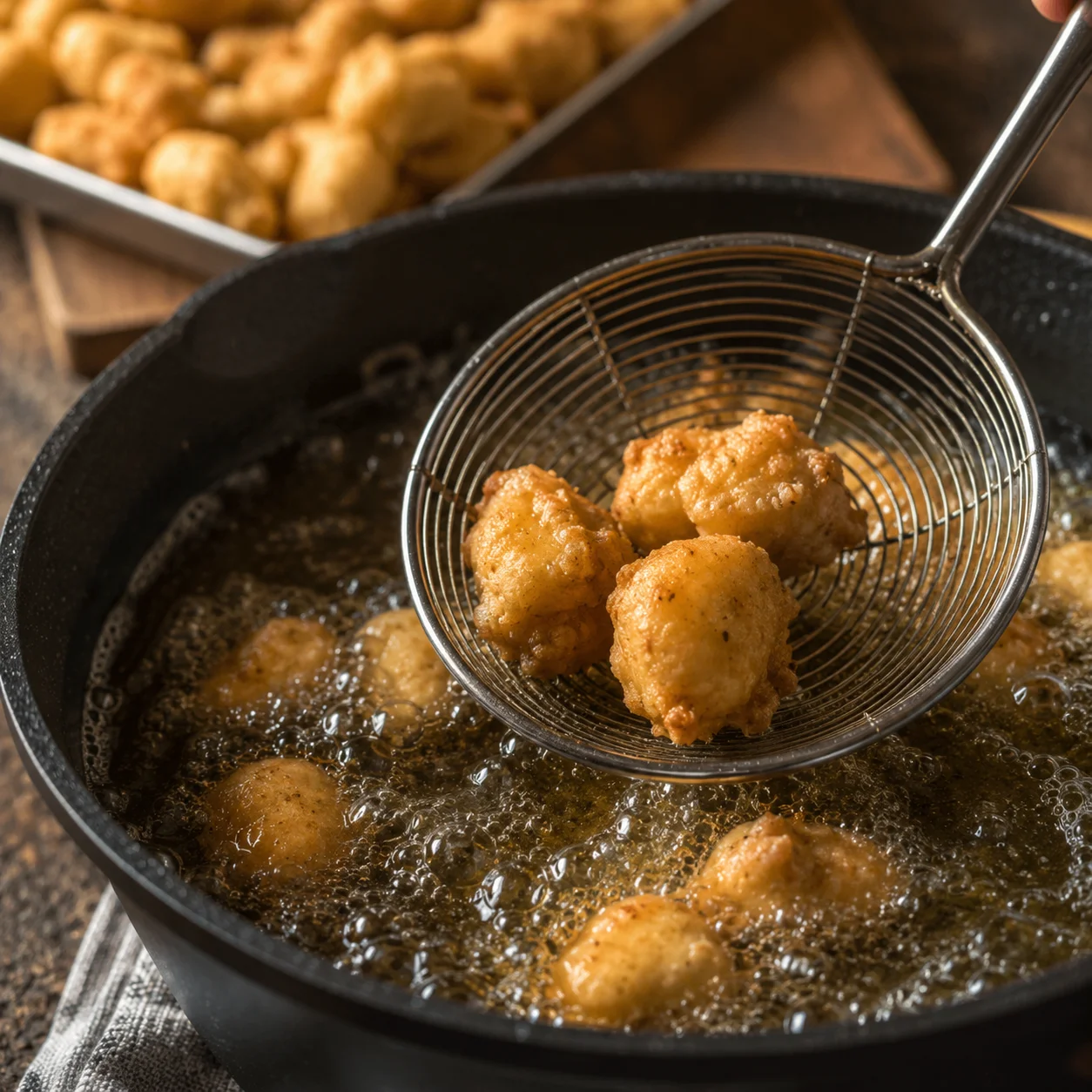
Dip cold curds in batter, let the excess drip, and lower them into the oil a few at a time. Fry 30-45 seconds until golden. Don't crowd the pot — too many curds drop the oil temperature and you lose the crust. Pull them the instant they're golden; the cheese is molten by then.
Frequently asked questions

What cheese curds are best for frying? +
Fresh, dense plain curds. Gardner's plain curds hold their shape in the fryer while going molten inside. Avoid older or supermarket curds that have lost their structure — they're more likely to blow out in the oil.
Why do my cheese curds explode when I fry them? +
Two usual causes: the curds were too warm, or the oil was too hot. Keep curds cold from the fridge until you batter them, and hold the oil at 375°F. A cold curd in correctly-heated oil gives the batter time to crisp before the cheese liquefies and bursts.
Can I fry cheese curds without beer? +
Yes. The beer is there for carbonation, which makes the crust lacy and light — not for flavor. Substitute cold sparkling water or non-alcoholic beer for the same effect. Plain cold water works too, just with a slightly denser crust.
What oil is best for frying cheese curds? +
A neutral oil with a high smoke point — peanut or canola. Avoid olive oil (smoke point too low) and don't use butter. You need oil that holds a steady 375°F.
Can you make beer-battered curds in an air fryer? +
Yes, with a tradeoff. Toss battered curds with a light oil spray and air fry at 400°F for 6-8 minutes. They're less lacy and crisp than deep-fried but far less messy and lower in oil. Watch closely near the end to avoid blowouts.
How do you keep fried cheese curds crispy? +
Drain them on a wire rack rather than paper towel, which steams the bottoms soggy. Salt while hot. Most importantly, serve immediately — fried curds have about a four-minute window before the cheese sets and the texture declines. They don't reheat well.
What do you serve with fried cheese curds? +
Ranch and marinara are the Wisconsin supper-club standards. Chipotle ranch, garlic aioli, honey mustard, or a beer-cheese dip all work. A cold lager on the side is traditional.