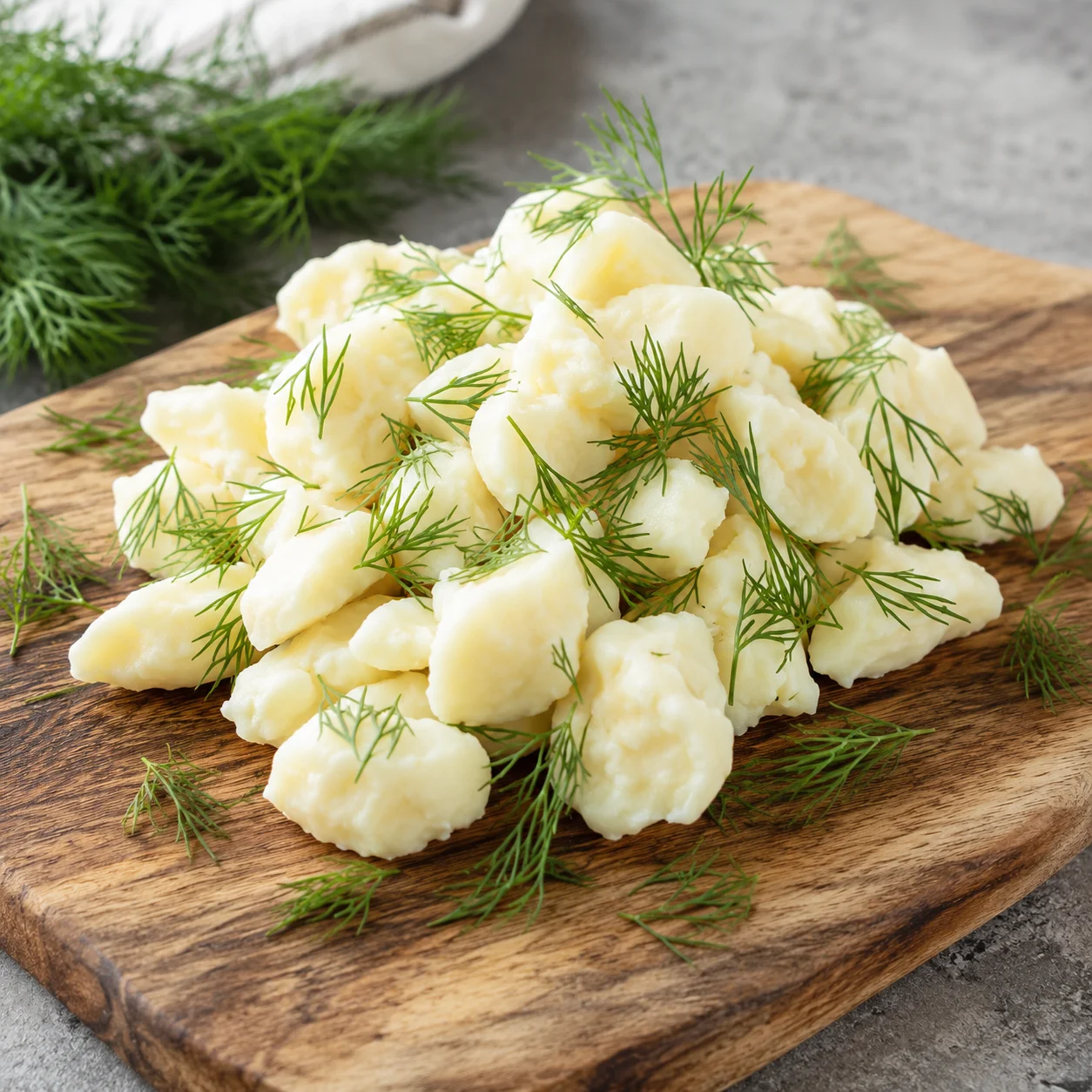
What dill does to a cheese curd.
Dill is one of the few herbs that works with cheese curds rather than competing against them. The herb is grassy, slightly anise-tinged, faintly tart — and those notes amplify the milk-tang already present in fresh curds rather than masking it. The squeak survives, the dairy character survives, and the overall effect is a cheese curd that tastes more like itself than a plain one does. This is rare. Most flavorings cover the curd; dill highlights it.
The trick of a great dill curd is the dill being fresh at vat stage, not dried-and-bottled. You can tell within one bite which one you have.
Gardner's Garlic & Dill: the top-scoring flavored curd.
The Gardner's Garlic & Dill Cheese Curds are our highest-scoring flavored curd, period — 9.4 out of 10. The combination works because the roasted garlic builds depth and the fresh dill provides brightness; neither dominates. Gardner's adds the dill at vat stage rather than dusting the curds afterward, which means the herb flavor is integrated through the body of the curd rather than sitting on the surface. The squeak is intact. The base is white cheddar. The price is $9.45 for a 6 oz bag, available year-round (not limited edition).
For a full breakdown of why Garlic & Dill earned the top flavored-curd score, see the full review.
Pure dill (no garlic) curds.
Standalone dill cheese curds without garlic are rarer than Garlic & Dill, but they exist. The flavor profile is slightly milder and slightly sweeter — without the savory backbone of garlic, the dill reads more like a fresh-herb finish on a salad than a charcuterie note. Some smaller Wisconsin producers (Cady Cheese, Mullins Cheese) make seasonal dill-only batches. They're worth tracking down for the contrast, but if you're choosing one, Garlic & Dill is the more rewarding pick.
The Henning's note.
Henning's Cheese in Kiel WI makes a Garlic & Dill curd that is genuinely good and worth knowing about — same white cheddar base, similar fresh-dill-at-vat-stage approach. The differences: Henning's is not gluten-free certified, comes in 10 oz instead of 6 oz, and is only available via store.henningscheese.com or at Pine River Dairy and select Wisconsin retailers. Score: 9.0. See the Henning's brand profile for the full background on the company.
Dill curd vs. dill pickle curd.
These are two different products, and they're often conflated. Dill cheese curds are flavored with fresh dill herb (and usually garlic) — bright, grassy, herbal. Dill pickle cheese curds are flavored to taste like a pickle — tangy, vinegar-forward, sometimes with brine notes. The herb-dill is the more cheese-friendly category; the pickle-dill is more of a novelty snack that leans on the brine, not the herb. We've covered dill-pickle curds separately when the search demand justifies a page.
Pairings and serving.
Dill curds eat best in two contexts: charcuterie boards with cured meats and stone fruit, and cold curd salads with cucumber and red onion. The herb cooperates with the briny, vinegar-edged flavors of pickles, capers, and cured fish (smoked salmon notably). Beverage pairings favor crisp dry whites (Sauvignon Blanc, Pinot Grigio), pilsners, gin-based drinks, and very cold vodka neat. Avoid heavy reds and bourbon — the dill reads vegetal against either.
The cold-salad application.
Garlic & Dill curds are the foundation flavor of our cold curd salad recipe — sliced and tossed with cucumber, red onion, fresh dill, and a lemon-yogurt dressing. The flavor stacks instead of competing because the dill in the curds and the dill in the salad reinforce each other.
Buying advice.
Top pick (year-round): Gardner's Garlic & Dill, $9.45/6oz, ships nationally.
Henning's alternative: Garlic & Dill, white cheddar, 10 oz, store.henningscheese.com.
Pure dill (no garlic): Seasonal local batches from Cady Cheese (Wilson WI), Mullins Cheese (Mosinee WI), or Pine River Dairy (Manitowoc WI). Worth a stop if you're driving through.